|
Light and Refined - The Bates Hundo 100 Baitcaster is the
Real Deal (continued)

 Casting: The
Bates Hundo features
the company's Matrix
Braking System, a
hybrid design that
combines an
externally
adjustable magnetic
system with an
internal centrifugal
setup located on the
spool itself. The
centrifugal portion
is adjusted by
clicking the plastic
tabs outward,
allowing the
inductor ring to
extend further into
the braking raceway.
This increases both
centrifugal and
magnetic pressure,
improving cast
control at the cost
of some casting
distance. Casting: The
Bates Hundo features
the company's Matrix
Braking System, a
hybrid design that
combines an
externally
adjustable magnetic
system with an
internal centrifugal
setup located on the
spool itself. The
centrifugal portion
is adjusted by
clicking the plastic
tabs outward,
allowing the
inductor ring to
extend further into
the braking raceway.
This increases both
centrifugal and
magnetic pressure,
improving cast
control at the cost
of some casting
distance.
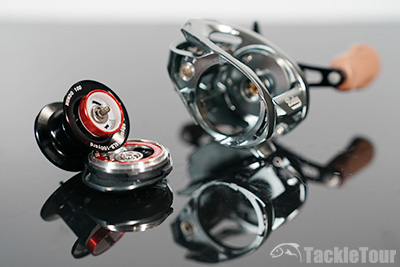
The Hundo features a
dual matrix braking
system which
includes an
externally
adjustable magnetic
system and a
centrifugal system
adjusted internally
on the spool
I found the factory
default (centered)
centrifugal setting
to work well in most
conditions, and
external magnetic
adjustments provided
enough control for
nearly all
applications, except
when casting
ultralight or
weightless plastics.
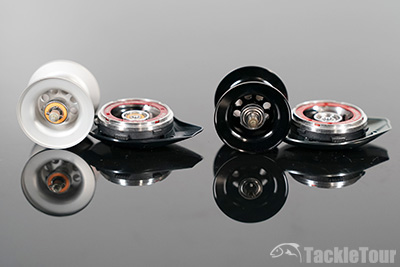
The Hundo 100 spool
(right) makes use of
stainless steel
bearings but the new
Salty Hundo (left)
adopts ceramic spool
bearings
If you're the type
of angler who
frequently tweaks
casting controls on
the fly, you may
find the Hundo
slightly more
involved to dial in
than offerings from
Shimano, Daiwa, or
Abu Garcia. That
said, once you get
the settings tuned
to your preferences,
the Hundo does an
excellent job of
managing overruns.
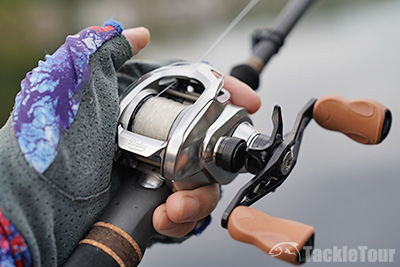
The Hundo is a
little more
difficult to dial in
than some competing
baitcasters but once
set for how you fish
is a strong caster.
The distance between
the spool and
levelwind guide is
enough that there
are not aggressive
angles impacting
line peel during
casts
Overall, the Hundo
is a solid caster.
The generous
distance between the
spool and the line
guide, along with
the funnel-shaped
levelwind design,
helps reduce
friction and allows
line to peel off
smoothly. Casting
distance and control
are both strong, and
notably different
compared to the
Trika Ti100.
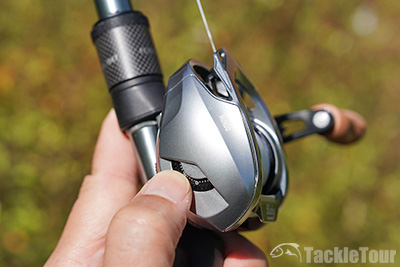
The magnetic casting
system can be
adjusted with one
hand on the fly
One of the biggest
distinctions between
the Hundo and the
Ti100 lies in their
braking and bearing
systems. The Ti100
employs ceramic
spool bearings,
while the Hundo uses
stainless steel and
high-precision
Nippon Miniature
Bearings (NMB).
These differences
translate to
noticeably different
casting
characteristics: I
was able to achieve
greater distance
with the Ti100, but
the Hundo felt
quieter and more
fluid on the cast.
Interestingly, the
newer Salty Hundo,
equipped with
ceramic spool
bearings, feels and
sounds more similar
to the Ti100.

The Hundo is a lot
quieter than the
Trika Ti100 when
casting but the
Ti100 casts further.
Both reels do well
with pinpoint
pitches.
Over time, I
encountered a
peculiar issue with
both of my original
Hundo reels: during
angled (non direct
overhand) casts,
particularly
underhand or
skipping casts, the
clutch would
sometimes re-engage
mid-cast. This
caused the lure to
snap back on the
line and greatly
increased the chance
of a backlash. I was
able to replicate
the issue
constantly,
especially when
throwing heavier
reaction baits on
rods with moderate
actions. It seemed
that vibration back
to the reel during
the cast was enough
to trigger the
clutch.
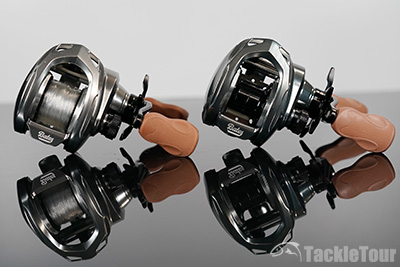
Comparing my
original Hundo with
the latest version.
Though hard to tell
the latest rev
(right) is a shade
deeper grey and
looks more like
gunmetal
Comparing the Hundos
to the Ti100, I
noticed that the
Trika required
slightly more force
to re-engage the
clutch, hinting that
the issue could be
pressure related.
Since I had
purchased the reels
at retail, I reached
out to Bates through
their website. To
their credit, a
representative
responded within the
hour, confirming
that a small batch
of Hundos had
shipped with lighter
springs. They
immediately offered
to replace both
reels.

The Hundo feels the
most different from
the Trika Ti100 when
cast
Just two days later,
I received the
replacements, which
featured a slightly
deeper anodized
finish - more
gunmetal than the
silver tone of the
originals. After
testing, we
confirmed that the
clutch spring
tension was
noticeably stronger.
Once spooled up and
back on the water,
the issue was
essentially
resolved. While a
very forceful cast
can still trigger
the clutch on rare
occasions, as it can
with many reels, the
problem that once
occurred regularly
was now almost
nonexistent.
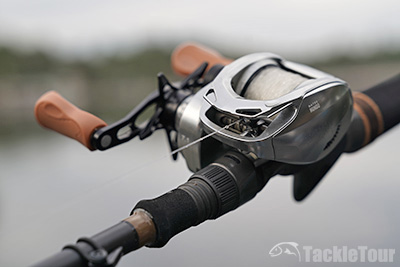
The anodized finish
looks high end but
also serves a
functional purpose
and adds a layer of
anti-corrosion
protection
With the clutch issue
resolved, I'm back
to praising the
Hundo's casting
performance, and
even more impressed
with the customer support I
received from Bates.
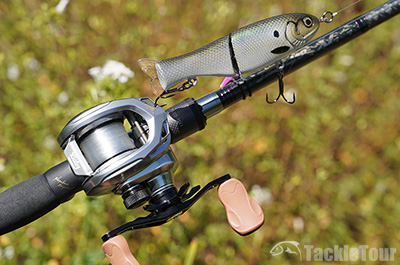
I'm not saying you
should, but the
reel's porting can
stow baits in a
pinch
Retrieve:
Much like a machined
round reel, the
Bates Hundo delivers
an impressively
solid retrieve.
Thanks to its rigid,
flex-free
construction, the
internal gear
alignment remains
tight, resulting in
a powerful,
connected feel with
every turn of the
handle.
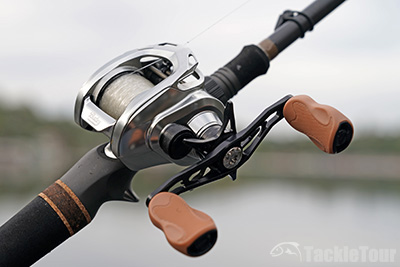
The Hundo's black
drag star and handle
are also anodized
and feature a gloss
black finish
The Hundo 100 is
offered in both
7.1:1 and 8.1:1 gear
ratios, available in
both right- and
left-hand retrieves.
Interestingly, I
found both gear
ratios to feel
equally powerful
when fishing larger
baits and battling
fish. In most
low-profile
baitcasters, higher
gear ratio models
often feel
noticeably weaker
under load, but the
Hundo's solid design
minimizes that
difference to the
point where it's
virtually
unnoticeable - at
least in standard
bass fishing
scenarios.
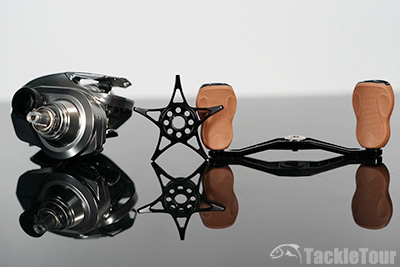
The Hundo's drag
star is aggressively
ported for weight
reduction, as is the
88mm crank arm
So how does the
Bates Hundo compare
to the Trika Ti100
in terms of retrieve
feel? They're
actually quite
similar, far more so
than in casting
performance, where
the two reels
diverge more
significantly.
Trika's use of
exotic materials,
including a machined
aluminum line guide,
titanium main shaft,
and Teflon-coated
their gearing, adds
to its smooth,
powerful feel and
may contribute to
enhanced long-term
durability.
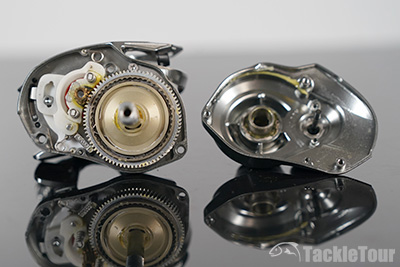
Time to look under
the frame, this
looks familiar
The Hundo, on the
other hand, utilizes
precision aluminum
gearing and a more
traditional
levelwind design. It
feels lighter in
hand and slightly
more torque-forward,
reminiscent of
high-end Daiwa
reels. Anglers can
really feel the
direct connection
between the handle
and the internal
gearing, which can
be
confidence-inspiring
when fishing
techniques that rely
on feedback and
control. This
includes
presentations like
spinnerbaits, bladed
jigs, small
swimbaits, and swim
jigs.
If you
prioritize a compact
workhorse baitcaster that's
light yet powerful,
with a connected and
confident retrieve,
the Bates Hundo 100
delivers.
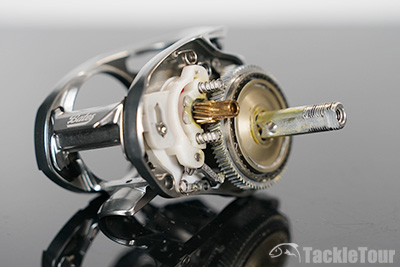
The Hundo features
an aluminum main
gear with relatively
large precision cut
teeth
Next:
Powerful carbon and titanium sealed drag
|