|





|
|
Shimano's Tescata rods work Lucanus Jigs with finesse
(continued)

 Retrieving:
There
are two ways to rig a Lucanus jig and both are designed to be fished effectively
with the Tescata. The first and my preferred method is what Shimano calls
“normal rigging” and is good for slow current and water up to 200ft. in depth.
Anglers basically connect braided line to a monofilament leader and tie the
leader directly to the top of the Lucanus jig. Retrieving:
There
are two ways to rig a Lucanus jig and both are designed to be fished effectively
with the Tescata. The first and my preferred method is what Shimano calls
“normal rigging” and is good for slow current and water up to 200ft. in depth.
Anglers basically connect braided line to a monofilament leader and tie the
leader directly to the top of the Lucanus jig.
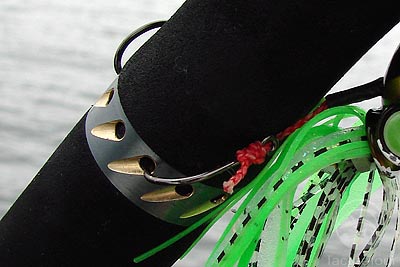
The hook hanger is designed to
hold both hooks securely and safely
The second method is essentially a deep sea drop shot with
an additional weight added beneath the jig. This is made possible with the
Lucanus design which has two positions to tie onto. This second method is good
for fast current and deep water over 200 feet and for use with 60-80g jigs.
There is a third method which is a combination of the two where the smaller
60-80g jig is fished on top and a second 150-200g size is fished on the bottom.
We were not able to test this as it is not legal in California to run more than
two hooks on a rock cod jig, and because each Lucanus jig already is armed with
two hooks adding another is not possible. This is the only state that this combo
rig cannot be employed.

The Tescata features a soft touch
painted Fuji reel seat for comfort and security
Fishing
the Lucanus jig can be subtle but the jig needs to be moving at all times to
draw strikes. The skirt on the jig looks great in the water and when the lure is
jigged or retrieved upwards then dropped the skirt really flashes enticingly. I
found that I could draw strikes by simply dragging the jig while bringing it up
and down a few feet at a time making sure it would not snag. While the Lucanus
jig defiantly snags far less than traditional jigs armed with treble hooks it
isn’t immune to snags, and there were occasions where I pulled hooks straight or
damaged the paint on jigs trying to dislodge them from the rocky bottom.
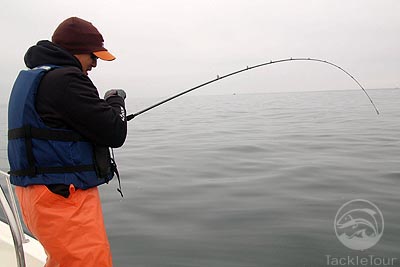
The first fish on the Tescata,
notice the tip arching over...
Like Butterfly jigs the Lucanus jigs are effective further
up the water column and I was able to get Black and Blue rockfish to take the
lure when they were schooled up. Even heavy damage on the jig seemed to do
little to reduce the lure’s appeal to fish, but once the longer portions of the
skirt were ripped off I did notice an immediate drop in the number of strikes,
and it is a good thing Shimano sells replacement skirts.
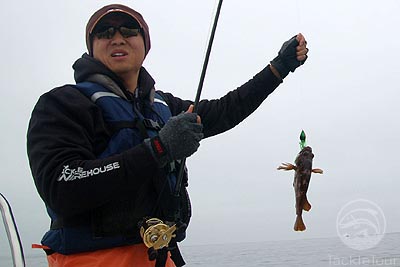
...even on a puny fish like this.
Hopefully we will get bigger later.
To compare the differences between the Tescata and other
jigging rods we tested the Lucanus jigs with various traditional saltwater
inshore sticks and found that I was actually losing a lot of fish. While I could
detect the strikes I was sticking a lot less fish, even though I fought the urge
to set the hook the fish simply were not staying buttoned on. The tips were
simply too stiff, not giving the fish enough time to really get stuck on the two
small hooks on the jig. Adding a mono leader helped absorb the shock but a soft
tip really is beneficial to this technique.
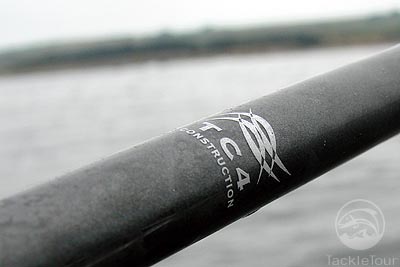
The TC4 construction delivers
light overall weight and surprisingly good power
Next Section: What about
power?
 |
|




|
|





