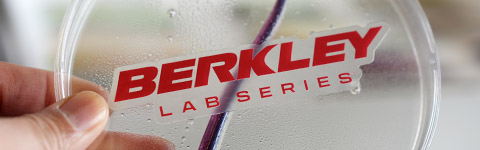
Stacked: The Layer-by-Layer Story of the Berkley Lab Series.
Baits so Good They Couldn’t Keep it Secret
| Date: |
3/23/26 |
| Tackle type: |
Lures |
| Manufacturer: |
Berkley |
| Reviewer: |
Zander |
Introduction: When Dylan Nutt's winning Bassmaster weight was
confirmed, the fishing world started asking questions. What was on the end of
his line? Where did it come from? And why hadn't anyone seen it before? The
answer had been months in the making - and for a number of us it started with an
invitation.
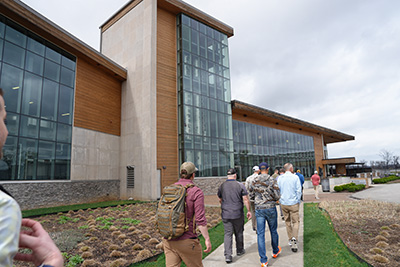
One week before the Classic we
arrived in Bardstown not knowing exactly what we would be learning about
One for the Senses: Early in the year, Berkley extended an invitation to
a group of industry media to attend a "Sensory Media Experience.” Some
invitations arrive with fanfare. This one arrived with almost nothing - just a
name, a date, and a location. No hints, no previews, no leaks. Just enough to
make me wonder. What Berkley had waiting in Bardstown, Kentucky would turn out
to be worth every unanswered question.
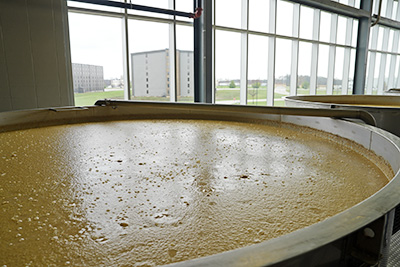
First we toured Bardstown Bourbon
Company's distillery and learned how the bourbon was made on site. Here the
mixture of at least 51% corn and other grains is fermented in what is called
"mash"
No additional information was provided on any technologies or tackle we would
learn about, just that we would be briefed in Berkley’s “newest science-driven
creation, experience sensory-focused activities, and preview future
innovations.” My interest was piqued and the team kept everything under wraps
until the day of the event.
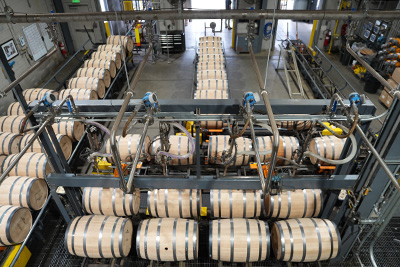
Once fermentation and distillation
is complete the alcohol is placed in new charred oak barrels
It was my first time in Kentucky, and I knew there had to be some sort of tie-in
with bourbon as Bardstown is the bourbon capital of the world. The venue was
Bardstown Bourbon Company, set on over 100 acres of active farmland where they
produce bourbon, whiskey and rye brands.
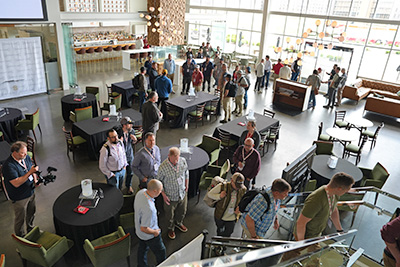
A lot of different media outlets on the tour
When I arrived, I found that I was surrounded by many friends in the
media, over twenty different publications including Jay Kumar from Bassblaster,
Matt and Tim from Tactical Bassin, Shane Beilue from Bassmaster, and Mark
Lassagne from Bass Angler Magazine just to name a few. We talked to each other,
and all wondered exactly what we would be hearing about and perhaps tasting at
this event.
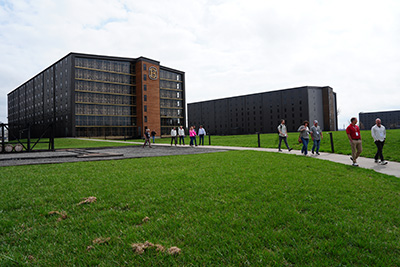
Checking out the rickhouses where
the barrels are stored and aged. Straight Bourbon must be aged at least two
years, but many times it can be much longer
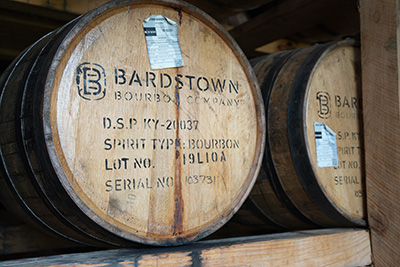
As the bourbon ages it interacts
with the charred oak barrels which releases sugars and adds the color and flavor
The new bait unveil would have to wait as we were ushered through a tour of the
facility which included seeing how the bourbon was made, as well as tasting a
few right out of the barrel in one of the rickhouses where the bourbon is aged
in charred American white oak barrels. We learned that the inside of the barrels
are charred to act as a carbon filter and help caramelize the wood sugars.
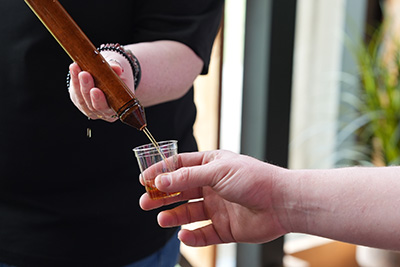
Sampling some of the Bourbon
straight from the barrel
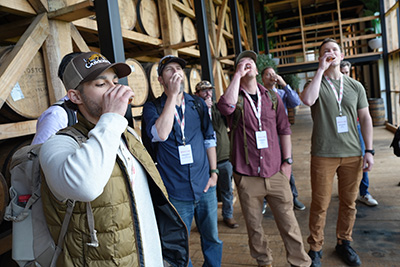
Cheers!
White oak is a requirement for the spirit to be classified as bourbon and is
chosen for the ability to allow the bourbon to breathe and help enable a very
complex flavor development as the spirit ages. The bottom line is that a lot of
science and detail goes into making quality bourbon.
As part of the event we participated in a blind tasting, led by renowned
American Chemist Dr. Henry “Hoby” Wedler, who was born blind and studied at the
UC Davis and has conducted computational chemical analysis of the compounds
involved in the flavoring of wine, as well as markers for the refinement of
olive oil, and now lending his expertise to the science of tackle.
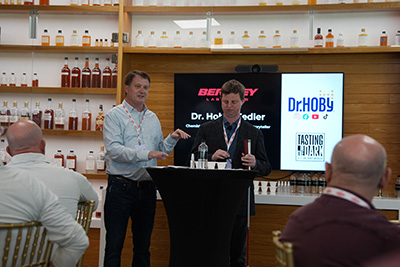
Dr. Hoby lead us in a blind
tasting where we experienced how senses can be heightened and how water can
affect how things both smell and taste
We smelled and tasted several different spirits and foods, all blindfolded, both
in their native form, and some with sprays of water on them. The big take away
for me is that when you don’t have your sense of sight you experience things
differently and the way you process certain smells and tastes can be enhanced as
you experience the stimuli and proceed to visualize. Also, the addition of water
can change and even enhance how something both smells and tastes, and this was
very noticeable with something as complex as bourbon. What it all boils down to
is science, and chemistry specifically. With all of that in mind it added plenty
of context to Berkley’s big reveal… the Berkley Labs Series.
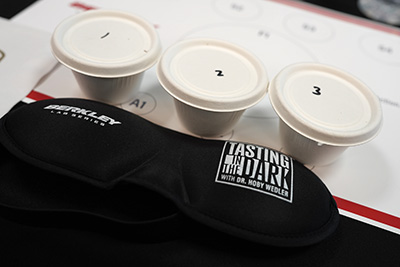
Some of the mystery scents. We
were blindfolded for the entire tasting
Layered up: Berkley kicked the product unveil off highlighting the
various innovations they made over the years from the introduction of PowerBait
in 1998, to Gulp in 2003, Gulp Alive in 2005, and most recently PowerBait
MaxScent in 2017, then explaining that the new Lab Series was the culmination of
all of these technologies all into a single bait series.
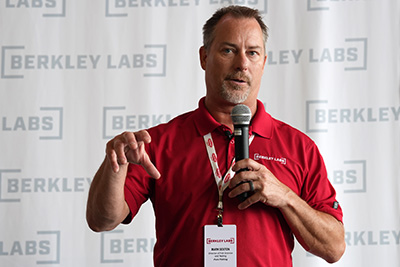
Time to learn about the big
unveiling. Mark Sexton, Director of Fish Science and Testing at Berkeley talks
about the history of their bait taste and scent development
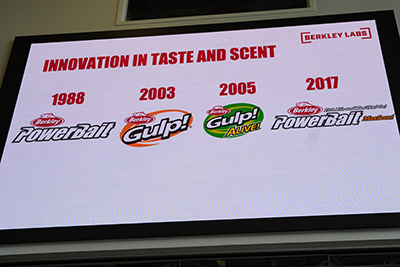
It all started with PowerBait in
1998, then Gulp on 2003, Gulp Alive in 2005, and most recently PowerBait
MaxScent which bass anglers, myself included, love
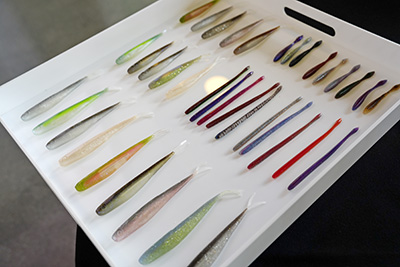
Meet Berkley's new Lab Series
baits
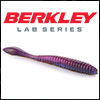
The new Lab Series is a small-batch poured and coated bait which incorporates
Powerbait in multiple layers for a proven taste profile, MaxScent for long-term
scent dispersion, and a brand new MaxScent Rapid Release Slime that is leverages
technology from the previous Gulp Series, to disperse scent the moment the bait
hits the water.
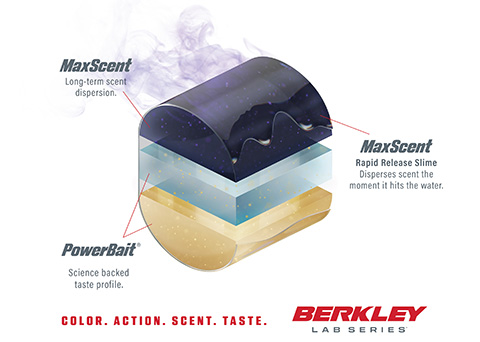
For the first time PowerBait,
MaxScent, and a new Rapid Release slime have all been combined into a single
bait construction
The team demonstrated this in two ways. First, we were able to spray some water
on the Finesse Worms and what felt like a normal worm immediately began to feel
tacky and then as more water was added became slimy. The worm both felt and
looked more organic.
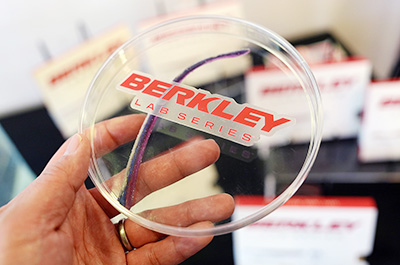
Testing the effect of water on the
Berkley Lab Series
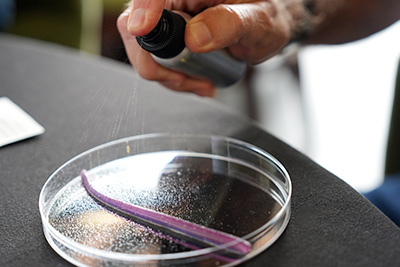
A few sprays of water...
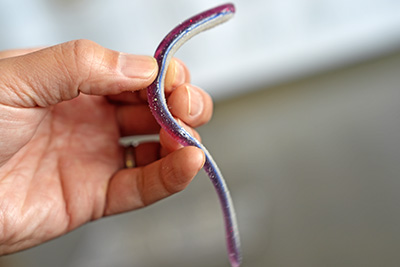
...and the bait suddenly feels
tacky then slippery, and much more organic feeling than a traditional soft
plastic
To show how the MaxScent slime dispersed underwater they then showed us a Lab
Series Minnow, the same bait that Dylan Nutt was fishing at the recent Classic
but couldn’t disclose at the time, only some purple dye was added to the slime
so that we could visually see the scent disperse.
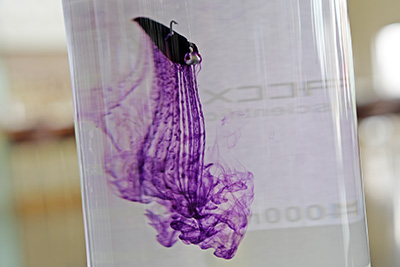
To help visualize the MasScent
Rapid Release slime a dye has been added to the slime but the dispersal remains
the same
Berkley’s Lab Series baits shed the slime in a very interesting dispersal that
created a loud trail around, under, and behind the bait as it is fished. The
scent dispersion should last for around 10 minutes at full effectiveness, and
even after that there is still some residue and the other MaxScent and PowerBait
features remain.
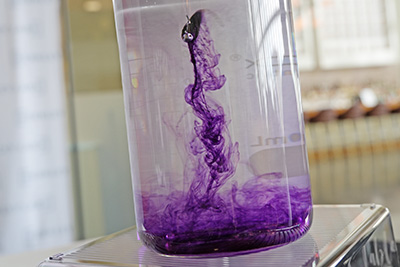
The slime forms a cloud around and
under the bait, and continues to bleed off for over ten minutes
The other very obvious feature of the layered approach is that the new Lab
Series looks much more detailed than previous PowerBait or MaxScent based baits.
The inclusion of these different layers allows for incredible depth, the
combination of colors, and for the first time translucency in a MaxScent bait.
They look really good and are on par or better than many hand poured custom
plastics.
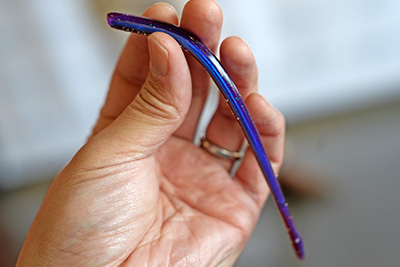
Another benefit of the layered
pour design are the amazing patterns that can now be created, including the
first translucent MaxScent baits
Next Section: A closer look, Action,
and Winning...